

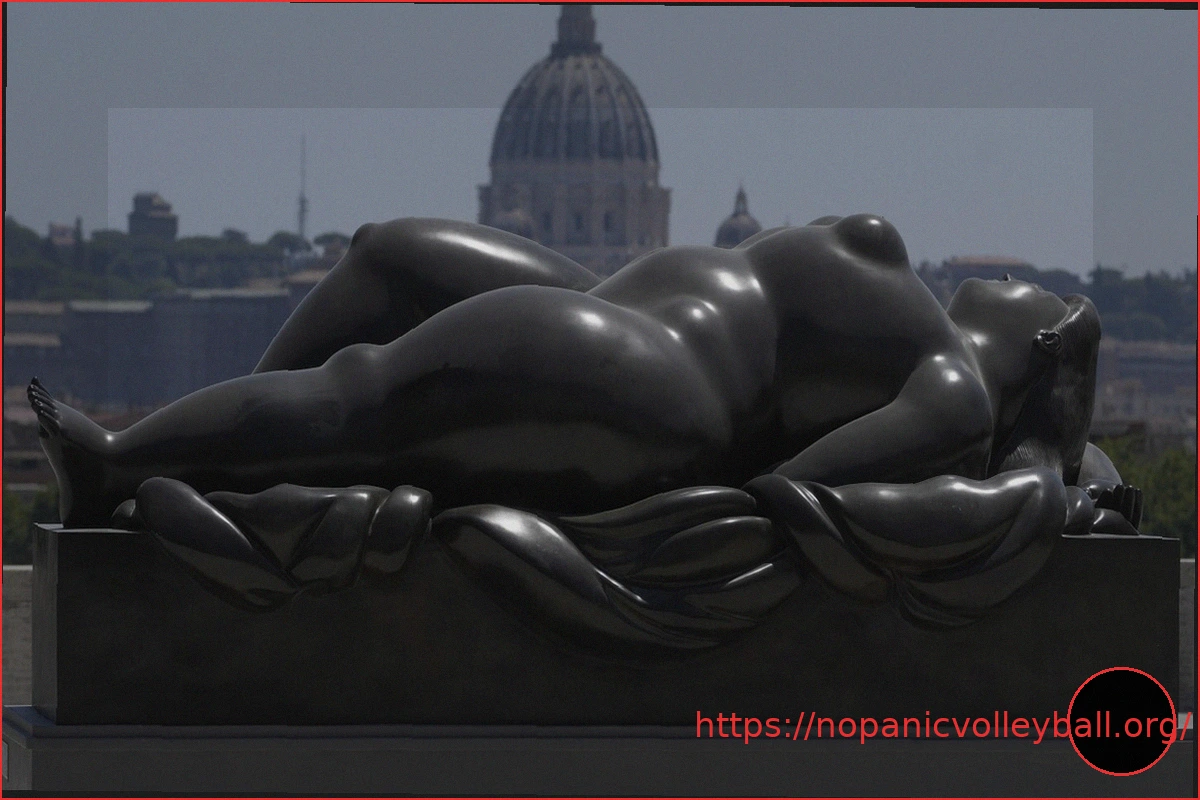
From November 29, 2025, to April 6, 2026, the Forte di Bard will host a significant exhibition dedicated to the renowned Colombian painter, sculptor, and draftsman Fernando Botero (1932-2023). Curated by Cecilia Braschi and titled “Fernando Botero: Monumental Technique,” the exhibition explores the artist’s entire career, highlighting the interplay between his diverse artistic techniques and the stylistic choices that shaped his work from the 1940s until his final pieces created in Monaco between 2019 and 2023. Just a few years after his passing on September 15, 2023, visitors will have the opportunity to see some of his lesser-known early works, pieces from his later years, and several previously unseen works from his personal collection.
Internationally recognized for his figures with full and exuberant forms, Fernando Botero explored a wide array of techniques: from watercolor to pastel, oil painting to fresco, and drawing with charcoal, ink, or bistre, all the way to marble carving and bronze casting.
Claiming heritage from Renaissance artists who were simultaneously draftsmen, painters, and sculptors, the Colombian artist sought a specific contribution from each technique to define his personal and unmistakable style, rooted in the exaltation of volumes. The clear lines of his drawings precisely define these forms; the chromatic harmonies of his painting impart strength and fullness; and his sculptures magnify them in three dimensions. In Botero’s art, every technique and every subject, even the most modest ones conventionally reserved for small formats, are rendered on large supports, thus becoming part of his monumental body of work.
Over the years, Botero’s deep study of art history went hand-in-hand with his exploration of ancient and traditional techniques, which he favored for their reliability and timelessness. Yet, he never hesitated to test their limits, freely and skillfully experimenting with the properties of various materials. Evidence of this includes his drawings on rough, mottled *amate* paper, specially sourced by the artist in Mexico, his magnificent pastels, astonishing large-scale canvas drawings, and even his final watercolors on canvas, applied to the back of unprepared supports to enhance the softness of the pictorial rendering.
Featuring over one hundred works organized into seven thematic sections, the exhibition, housed in the Cannoniere rooms, traces the artist’s main themes and motifs, from still life to nudes, genre scenes to portraits, dialogues with art history to social and political commentary, and celebrations of popular festivals and events. To underscore the connection and complementarity between various techniques, works on paper, drawings, and watercolors on canvas are displayed alongside oil paintings, and bronze and marble sculptures. For the first time, preparatory sketches will be exhibited alongside large finished paintings, in addition to emblematic works such as “Self-Portrait with Archangel” (2015), where the artist depicts himself in the act of painting, various versions of “Leda and the Swan,” “Venus,” and “The Abduction of Europa,” confronting major classical art themes, or even “Earthquake” (2000), revealing an artist for whom art is, above all, an act of love.
Visitors will thus be able to delve into the artist’s creative process and appreciate the linearity of his structured and coherent aesthetic approach spanning over 60 years.
The exhibition will also feature an inclusive tactile pathway to enhance and broaden content accessibility.