

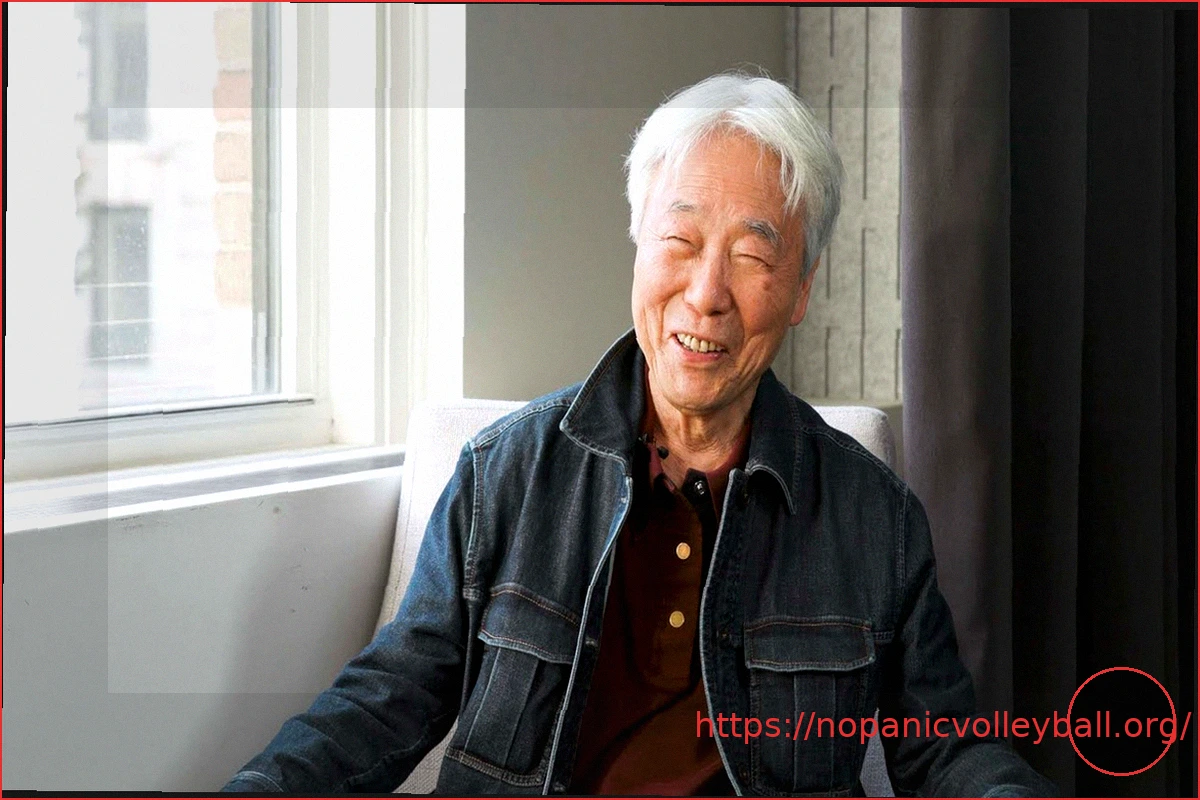
The Dia Art Foundation has announced a major solo exhibition of works by Lee Ufan, to be presented at SMAC Venice (San Marco Art Centre) as an official Collateral Event of the 61st International Art Exhibition – La Biennale di Venezia. Curated by Jessica Morgan, Dia’s Nathalie de Gunzburg Director, this significant show is scheduled to open on May 9, 2026.
Developed in close collaboration with the artist himself, the exhibition will trace the evolution of Lee Ufan’s distinctive visual language. It will feature a range of works, from new and historical paintings to large-scale installations, including a brand new site-specific commission. The exhibition will unfold across the eight rooms of SMAC Venice at the Procuratie in Piazza San Marco, showcasing an exceptional selection of pieces spanning seven decades of the artist’s career. The presentation aims to highlight Lee’s ongoing dialogue with architectural spaces and his continuous commitment to creating environments that foster contemplation and heightened awareness.
A leading figure in the Japanese Mono-ha (School of Things) movement and a key exponent of the Korean Dansaekhwa (monochromatic painting) movement, Lee Ufan has extensively explored how to embody and represent space and time through his gestural approach to painting on canvas.
Jessica Morgan commented, “I am delighted to bring the Lee Ufan exhibition to Venice to celebrate the artist’s ninetieth birthday. Dia has cultivated a deep and lasting relationship with Lee, making it especially significant that this year we will present two ambitious projects: at Dia Beacon and at SMAC Venice. The impact and importance of Lee’s work are immeasurable, and the forthcoming presentations, featuring foundational pieces from his oeuvre, will illuminate the philosophical and material threads – gesture, interval, balance, and spatial tension – that have defined his practice over many decades.”
Anna Bursaux, David Gramazio, and David Hrankovic, founders of SMAC Venice, stated: “We are honored to collaborate with the Dia Art Foundation and Lee Ufan on this project, which represents the most significant presentation of the artist’s work ever staged in Italy. Curated by Dia’s director and developed in close collaboration with Lee, the exhibition will feature key works from the artist’s extensive body of work alongside a new site-specific installation. This show underscores SMAC Venice’s mission to provide a platform for meaningful institutional collaborations and to showcase artists of enduring international relevance.”
Coinciding with the Venice presentation, Dia Beacon in Beacon, New York, will open a new exhibition featuring Lee’s paintings and sculptures. Together, these two projects will commemorate the artist’s 90th birthday, highlighting his extraordinary contributions across various disciplines and geographic regions.
Born in Gyeongsangnam-do, Korea, in 1936 during the Japanese occupation, Lee Ufan initially trained in traditional ink painting techniques at Seoul National University High School. In 1956, he moved to Tokyo, where he pursued philosophy at Nihon University. His first solo exhibition took place at Sato Gallery (Tokyo) in 1967, and the following year, his work was featured in the “Contemporary Korean Painting” exhibition at the National Museum of Modern Art, Tokyo. In 1969, Lee staged an ephemeral happening and created contingent structures for the 9th “Contemporary Art Exhibition of Japan” at the Tokyo Metropolitan Museum of Art, a pivotal moment marking a departure from his earlier optical and discrete paintings. This exhibition brought together Japanese artists associated with Mono-ha (School of Things). Throughout the 1970s, Lee participated in various exhibitions alongside North American, Asian, and European artists, underscoring a shared interest in material, process, and site. A passionate educator and prolific cultural critic, Lee Ufan has authored 17 books. In recent decades, his work has gained global recognition, leading to exhibitions worldwide. In 2010, the Lee Ufan Museum, designed by Tadao Ando, opened in Naoshima, Japan. His sculptures, increasingly essential and monumental, consistently combine natural and industrial materials, reflecting his relational philosophy. The artist currently resides in Kamakura, Japan, and Paris, France.