

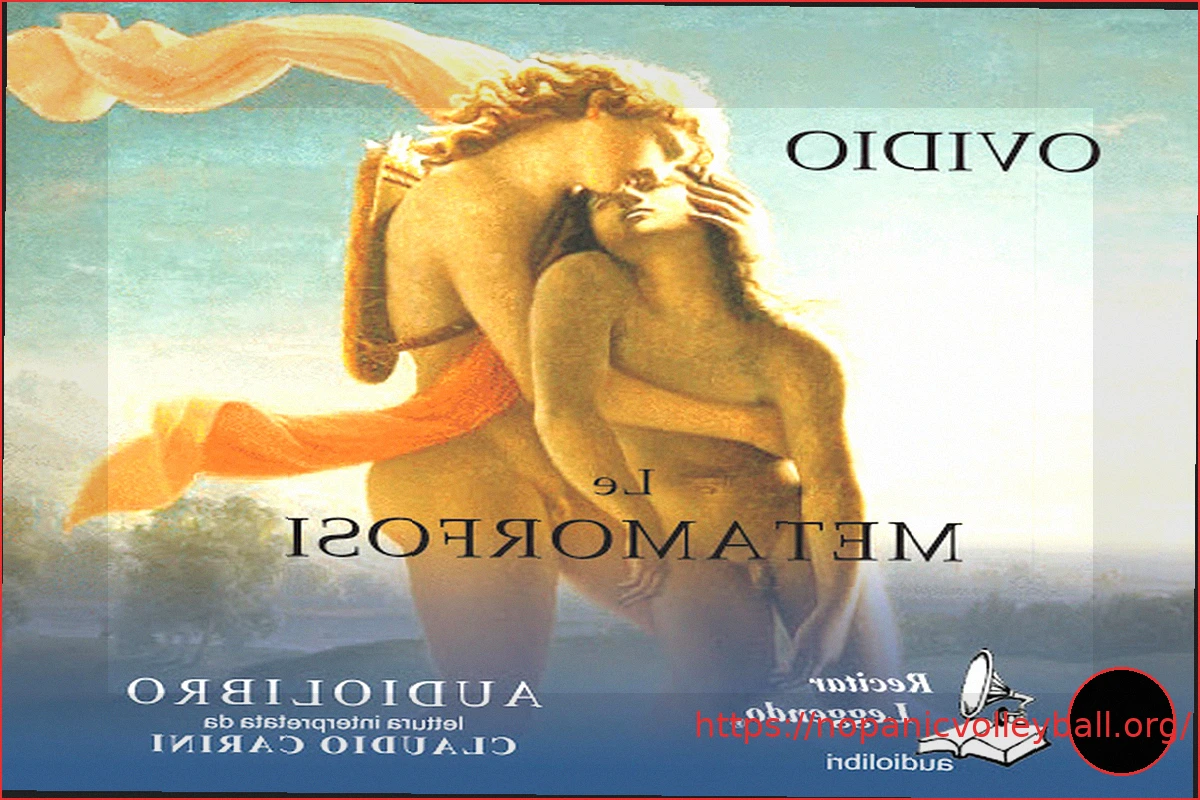
The exhibition “Metamorphoses: Ovid and the Arts” has recently opened its first chapter at the Rijksmuseum in Amsterdam, an ambitious project resulting from the collaboration between the Dutch museum and Galleria Borghese. Curated by Francesca Cappelletti and Frits Scholten, this exhibition, conceived through a shared scholarly dialogue, will later travel to Rome, appearing at the Galleria Borghese from June 23 to September 20, 2026, in a distinct and original presentation.
Drawing its inspiration from Ovid’s Metamorphoses – a cornerstone of Western literary tradition and imagination – the exhibition delves into the concept of metamorphosis as a universal principle. It offers a unique lens through which to understand the cosmos, the nature of matter, and the human condition. Ovid’s epic poem thus serves as a gateway to a worldview rooted in constant change, the instability of forms, and the seamless permeability of boundaries between the human, natural, and divine realms.
The historic spaces of Galleria Borghese provide an exceptionally fitting backdrop for this exhibition. The very origins of the Villa, located “outside Porta Pinciana,” are deeply intertwined with the symbolic universe of the Metamorphoses, making the venue not merely appropriate but intrinsically connected to the exhibition’s core theme. Cardinal Scipione Borghese commissioned the noble Casino to house a portion of his collection, envisioning its architecture as a cultural instrument designed to weave together myth, art, and self-representation into a cohesive system of meaning.
This intrinsic connection deepened significantly in the eighteenth century during restorations initiated by Marcantonio IV Borghese and carried out by Antonio Asprucci. Asprucci meticulously reorganized the interior, placing sculptures centrally within the rooms and integrating them into decorative schemes directly inspired by the Metamorphoses. This created an environment where Ovid’s presence is not just thematic but structurally pervasive.
At the heart of the exhibition lies the idea of metamorphosis as a generative principle, capable of shaping and reshaping the cosmos, matter, and the body itself. Through its famous, often tragic myths and narratives, Ovid’s Metamorphoses has, for centuries, provided artists with an inexhaustible reservoir of images and conflicts. It has given visual form to a spectrum of human experiences: passions, desires, cunning, violence, deception, and even possibilities of redemption.
The exhibition’s curated journey will unveil a worldview where gods, humans, and nature are bound by a shared destiny of continuous transformation. Beyond exploring classic Ovidian themes such as Love, the Afterlife, and the creation of the world, the show will also shed light on the phenomenon of the “Ovide moralisé,” a medieval reinterpretation of Ovid’s work that profoundly influenced mythological depictions during the Renaissance.
From the grand masters of the Renaissance and Baroque periods to artists closer to our contemporary era – including revered names like Correggio, Michelangelo, Titian, Rubens, and Poussin, extending to Gerôme, Rodin, and Brancusi – the exhibition will powerfully underscore the visual and conceptual impact of Ovid’s timeless tales.
Central to the display will be Gian Lorenzo Bernini’s iconic “Apollo and Daphne” and “Pluto and Proserpina,” alongside other mythological masterpieces from the Gallery’s collection. The exhibition will reaffirm the enduring relevance of myth and its pivotal role in the construction of the European imagination.
The visitor’s path will offer a symbolic and sensory exploration of change, eloquently evoking the dynamic tension between order and transformation, the fluidity of identities, and the intricate relationship between the body and nature. In this profound dialogue between myth and art, metamorphosis emerges not solely as a physical alteration but as a fundamental aesthetic and ontological category, prompting contemplation on the complex interconnections between time, space, matter, and form.
An accompanying catalog, produced in collaboration with the Rijksmuseum and available in Italian, English, and Dutch, features all the works exhibited at both venues and includes essays by Italian and Dutch scholars.